Commissions
Whether for corporate or personal collections, commissioning artwork for your space can express an intimate narrative and give you the opportunity to visually communicate your unique story. Fazakas Gallery has expertise in commissioning artworks for institutions, public installations, commercial spaces, and residential homes. In handling both small and large-scale projects, we assist our clients every step of the way to acquire custom pieces that best suit their needs. Through an engaging and rewarding process, we connect our clients with emerging or established artists to ensure that the artwork they select is the right fit for their budget and space, and allows them to have a lasting connection with their finished piece. We ensure an effortless process for all parties involved by handling the development of the artwork from concept to installation, helping our clients fulfill their creative vision with ease.
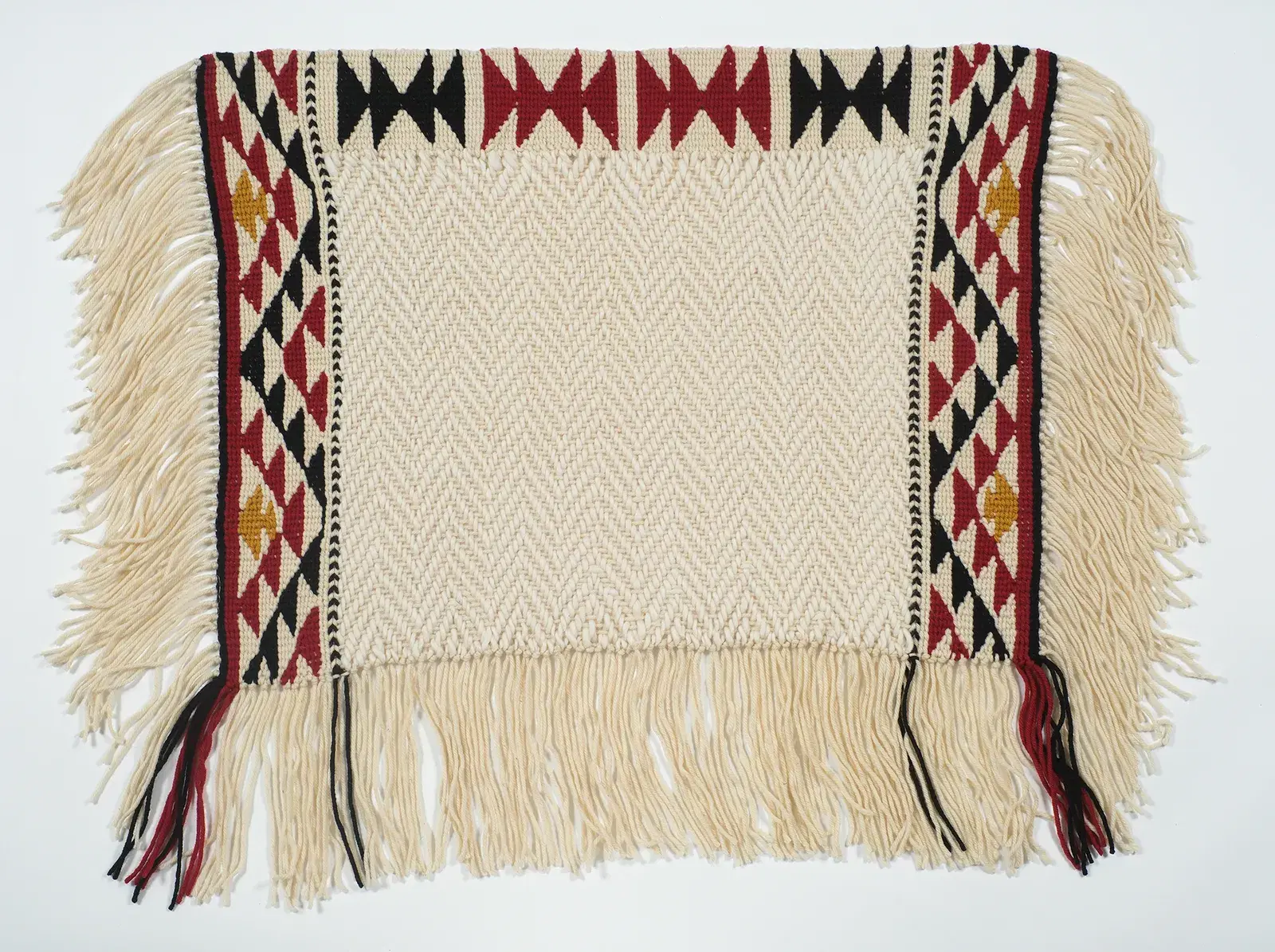
Chief Janice George, Small Chief Blanket, 2025
Commissions
Whether for corporate or personal collections, commissioning artwork for your space can express an intimate narrative and give you the opportunity to visually communicate your unique story. Fazakas Gallery has expertise in commissioning artworks for institutions, public installations, commercial spaces, and residential homes. In handling both small and large-scale projects, we assist our clients every step of the way to acquire custom pieces that best suit their needs. Through an engaging and rewarding process, we connect our clients with emerging or established artists to ensure that the artwork they select is the right fit for their budget and space, and allows them to have a lasting connection with their finished piece. We ensure an effortless process for all parties involved by handling the development of the artwork from concept to installation, helping our clients fulfill their creative vision with ease.
The Coast Salish are well known for their expertise in weaving and textiles, having created blankets, garments, and other important belongings since time immemorial. Blankets were traditionally woven by women and required an extensive time commitment to complete. They could be used to distinguish honoured individuals, or identify the wearer as a leader in the community. Blankets also represented an individual's wealth and were often given away as a show of prosperity. While there are fewer practicing weavers today than there were in pre-colonial times, the art of Salish weaving lives on through contemporary artists like Chief Janice George who have devoted their careers to teaching and preserving the practice.
Chief Janice George is a hereditary chief, curator, and educator from a prominent Squamish family. Since the age of 18, George has been committed to interviewing, recording, and learning from the Squamish Nation Elders, her most honoured teachings.
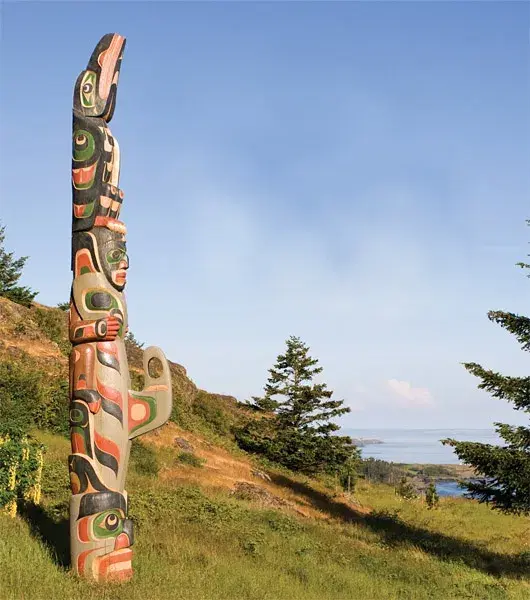
Rande Cook totem pole, Alert Bay, BC
Totem Poles
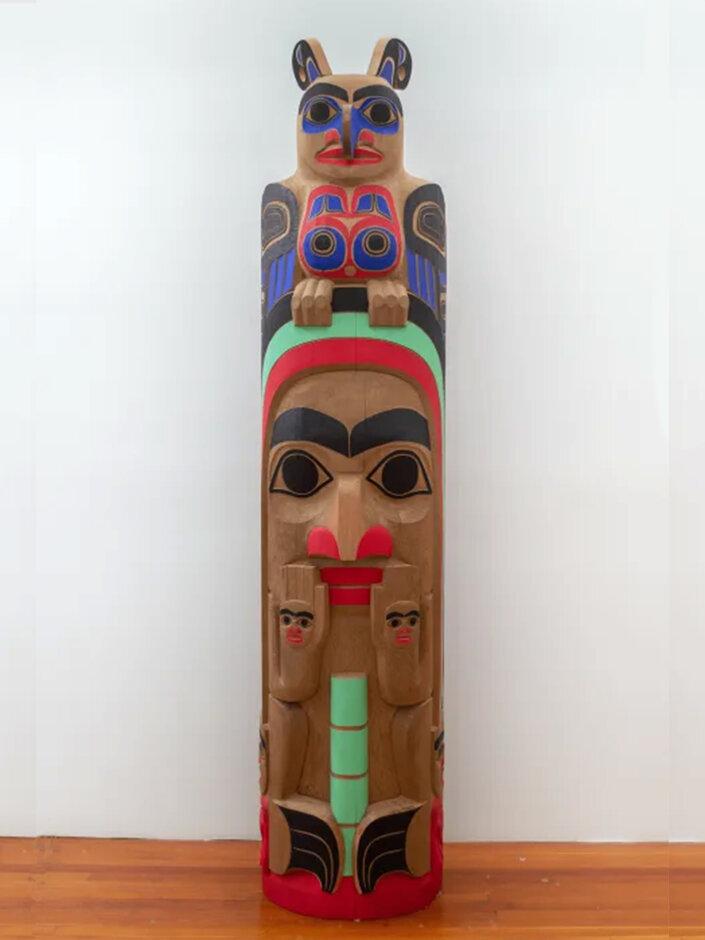
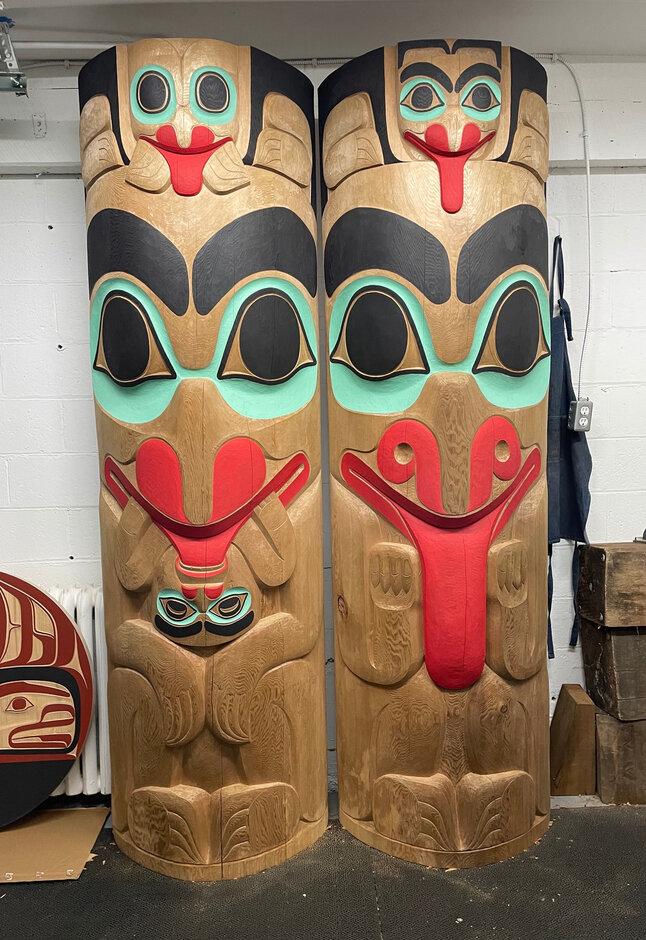
Totem poles, each carved from a single trunk, are among the largest works created by Northwest Coast artists. Most totem poles are made from Western red cedar, a rot-resistant tree that is straight-grained and easy to carve. Traditionally, free-standing totem poles were placed before houses to proclaim the identity and status of the owners; some, called housefront poles, stood up against the centre front of houses. These and other types of poles were carved and decorated with paint to display the owners' family history, ancestors, crests, and myths. When a pole is raised, the history it tells is publicly declared, along with the names, rights, and property of the owner.
Today, totem poles have also become an artistic means of expressing personal or corporate narratives, giving owners the opportunity to visually communicate their story. LaTiesha Fazakas' portfolio includes numerous commissions and management of large scale totem pole projects ranging from 10-feet to 35-feet high. Please contact us to view our portfolio.
Don Yeomans
The Stanford Legacy Pole, 2002
Stanford University, Stanford, CA
Don Yeomans
Celebrating Flight, 2007
Vancouver International Airport, Vancouver, BC
RANDE COOK
Museum Volkenkunde Commission, 2012
Museum Volkenkunden, Leiden, Netherlands
Corey Bulpitt Pole Commission in progress
Don Yeomans in-progress pole in his studio
Pole in progress in Don's studio